Static vs Dynamic QR Codes: Which Fits?
Print 500 table tents with a menu QR code, then realize your lunch specials changed, your ordering link moved, and half the dining room is scanning an outdated page. That is the real difference in static vs dynamic QR codes. One is fixed the moment you create it. The other gives you room to change the destination later without reprinting the code itself.
If you are choosing between the two, the best option is not about which one is "better" in general. It is about how permanent your content is, whether you need scan data, and how expensive it would be to replace printed materials if something changes.
Static vs dynamic QR codes at a glance
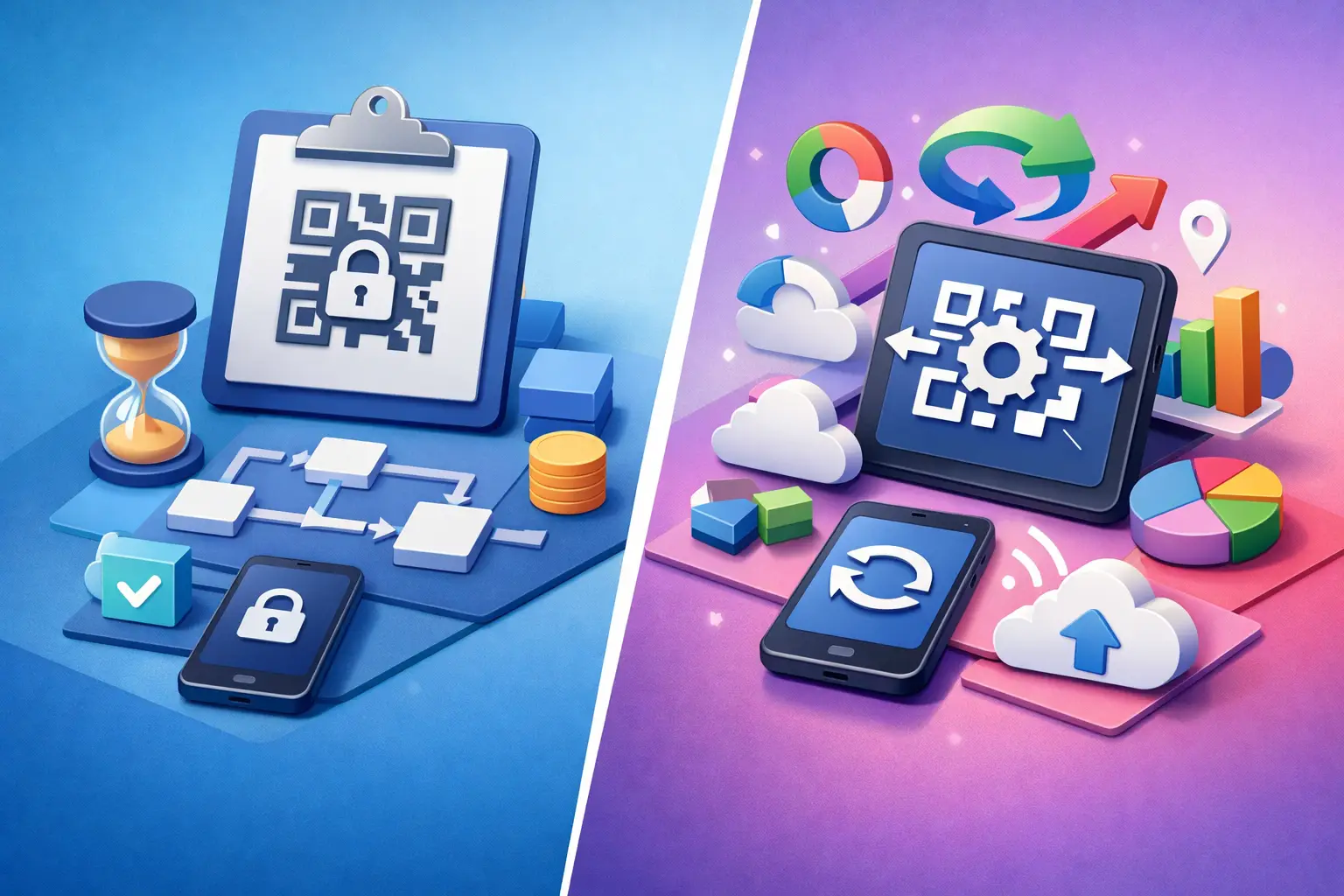
A static QR code stores the final destination directly in the code. If it points to a website, phone number, Wi-Fi network, email address, or plain text, that information is baked in. Once generated, it is not editable.
A dynamic QR code uses a short redirect or hosted layer between the code and the final destination. That extra layer is what makes editing possible. You can update where the code sends people after it has already been printed, shared, or posted.
That sounds like a small technical detail, but it changes how the code performs in the real world. Static is simple and permanent. Dynamic is flexible and measurable.
When static QR codes make more sense
Static QR codes are the right choice when the destination will not change or when you want the fastest, most direct setup possible. For many everyday uses, that is enough.
A digital contact card with your core details, a Wi-Fi access code for guests, a prefilled SMS, a direct phone call action, or a plain text note can work perfectly as static. The same goes for a map pin to a stable business location or a donation page that is unlikely to move.
Static is also useful when you want a no-friction option for one-off needs. If you are printing a few flyers for a weekend event, labeling personal items, or adding a simple code to a classroom handout, editable infrastructure may be more than you need.
There is also a cost angle. Static codes are often the simplest free option, which makes them attractive for users who need something functional right away without setup overhead.
The trade-off is obvious once anything changes. If the destination breaks, the campaign shifts, or the content needs an update, the code has to be replaced everywhere it appears.
When dynamic QR codes are worth it
Dynamic QR codes are built for anything that might change after launch. That includes marketing campaigns, restaurant menus, event pages, real estate listings, social profile hubs, app download pages, and business materials that stay in circulation for months.
Let’s say you print a QR code on product packaging, window signage, trade show materials, or business cards. Reprinting those assets every time a link changes is slow and expensive. A dynamic code lets you keep the printed code and change the destination behind it.
That matters for operational use too. A pet ID page may need updated contact details. An emergency contact page may need revised information. A vehicle listing or property listing may need to point to a different active page later. Dynamic gives you that control.
The other major reason to choose dynamic is visibility. If you want scan tracking, you need dynamic functionality. That gives marketers, event organizers, and business owners a way to measure engagement instead of guessing whether a code is actually being used.
The biggest differences that affect your decision
Editability
This is the headline difference in static vs dynamic QR codes. Static codes cannot be edited after creation. Dynamic codes can.
If your content changes often, or even might change, dynamic usually wins. If the content is fixed and likely to stay fixed, static is often enough.
Tracking and analytics
Static codes do not typically provide scan analytics because there is no redirect layer to capture scan activity. Dynamic codes can track scans in real time, which is useful when you want to measure performance by campaign, location, or asset.
That can be the deciding factor for posters, direct mail, event signage, packaging inserts, and other printed materials tied to a business goal.
Longevity of printed materials
The longer something stays in the world, the more valuable flexibility becomes. A code on a temporary handout is one thing. A code on storefront signage, menus, packaging, labels, or business cards is another.
If replacing the printed item is expensive or inconvenient, dynamic is usually the safer bet.
Simplicity
Static codes are straightforward. You create them and use them. There is no dashboard logic behind the destination because the destination is already inside the code.
Dynamic codes add functionality, but they also come with more ongoing management. That is usually worth it for business use, though not always for a simple personal task.
Static vs dynamic QR codes by use case
For a restaurant or cafe menu, dynamic is usually the smart choice. Menus change. Prices change. Seasonal items come and go. Reprinting table signs just because one URL changed is wasteful.
For a digital business card, it depends. If you want a basic contact download with stable information, static can work. If you expect role changes, new social links, updated portfolios, or lead tracking, dynamic makes more sense.
For event materials, dynamic is often the better option. Schedules shift, venues update instructions, and registration pages may need to change close to the event date.
For a personal profile page or social link hub, dynamic is usually more practical because those destinations tend to evolve over time.
For Wi-Fi sharing, static is often ideal. It is simple, direct, and the information is usually stable.
For posters, packaging, retail signage, and campaign assets, dynamic is typically the stronger business choice because it protects the value of printed materials and gives you insight into scan activity.
Cost is not just the price of the code
People often compare static and dynamic based only on whether one is free and the other is paid. That is too narrow.
The real cost includes reprints, redesigns, labor, campaign delays, and lost opportunities when a code points to old content. A free static code can become expensive if it is attached to materials that are hard to replace. A dynamic code can save money simply by preventing one reprint run.
That said, not every use case needs the added functionality. If you are creating a code for something permanent and low-stakes, static remains a smart and efficient option.
A simple way to choose
Ask yourself three questions.
Will the destination ever change? Do I need to track scans? Would replacing the printed code be annoying or expensive?
If the answer is no to all three, static is likely enough. If the answer is yes to even one, dynamic deserves serious consideration.
That is why many users end up using both. Static handles fixed, simple tasks. Dynamic handles active business assets, customer-facing campaigns, and anything that benefits from ongoing control.
Which option is better for most businesses?
For businesses, dynamic often delivers more long-term value because business information changes more than people expect. Landing pages get updated. Promotions end. menu links move. Teams want data. Printed assets outlast the campaign they were made for.
Still, there is no reason to force dynamic into every situation. If you need a fast QR code for a stable phone number, email action, or Wi-Fi setup, static is faster and perfectly effective.
A practical platform should let you use both based on the job. That is the useful way to think about it. Not as a winner-versus-loser comparison, but as a tool choice matched to how fixed or flexible your destination needs to be.
If you want the shortest path from idea to printed code, static gets there quickly. If you want room to adjust after launch, dynamic gives you that margin. The right choice is the one that still works a week, a month, or six months after you put the code in front of people.